

Oyas


The olla regulates water flow according to each plant's needs





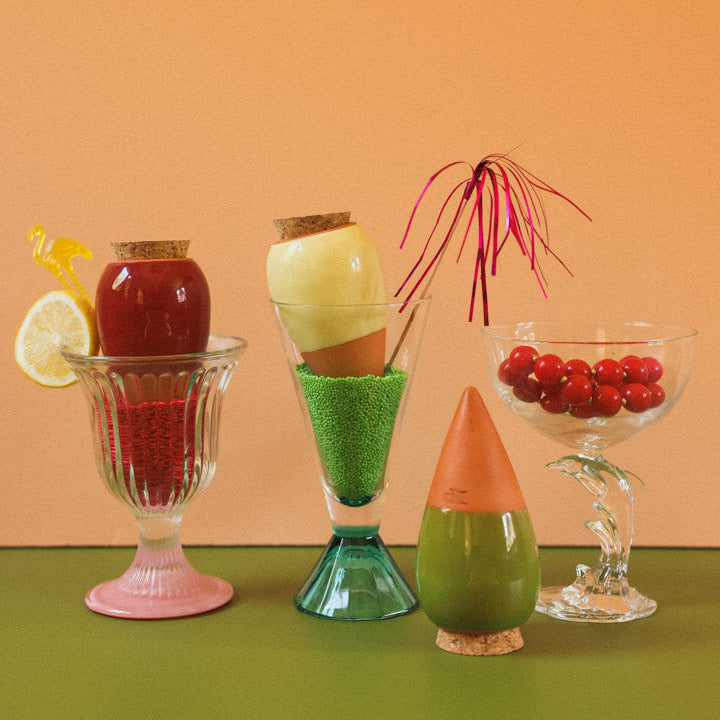
We love our plants. We talk to them, move them around to find THE perfect light, give them little nicknames. And then... forget to water them for ten days. Or, feeling guilty, drown them in half a litre of water on a Sunday evening. The result? Unhappy roots, yellowing leaves, and that little voice whispering, "I'm just not a plant person".
Good news: you're not the problem. The method is. And the solution has been around for more than 4,000 years. The oya, a little terracotta reservoir you push into the soil, works on a beautifully simple physical principle: terracotta's natural porosity lets water seep out slowly, in step with the plant's needs. No tech, no batteries, no app. Just terracotta and physics.
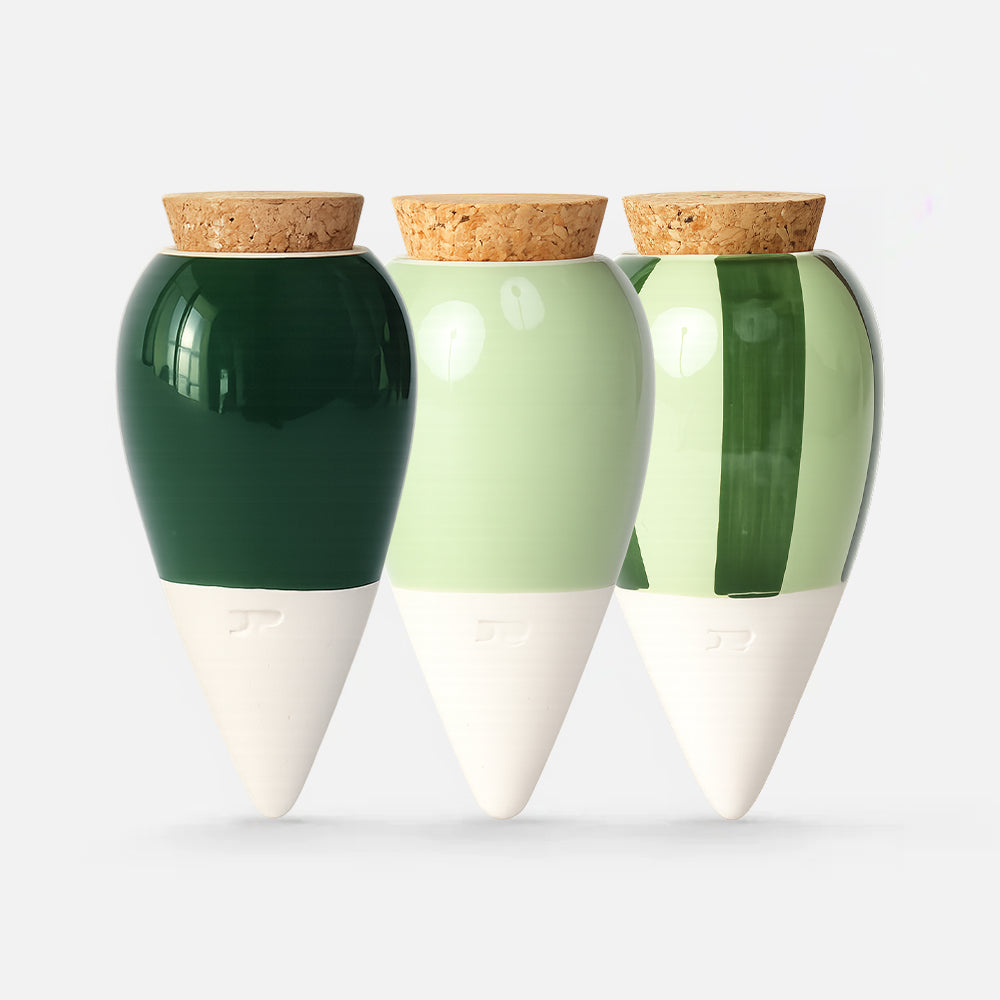
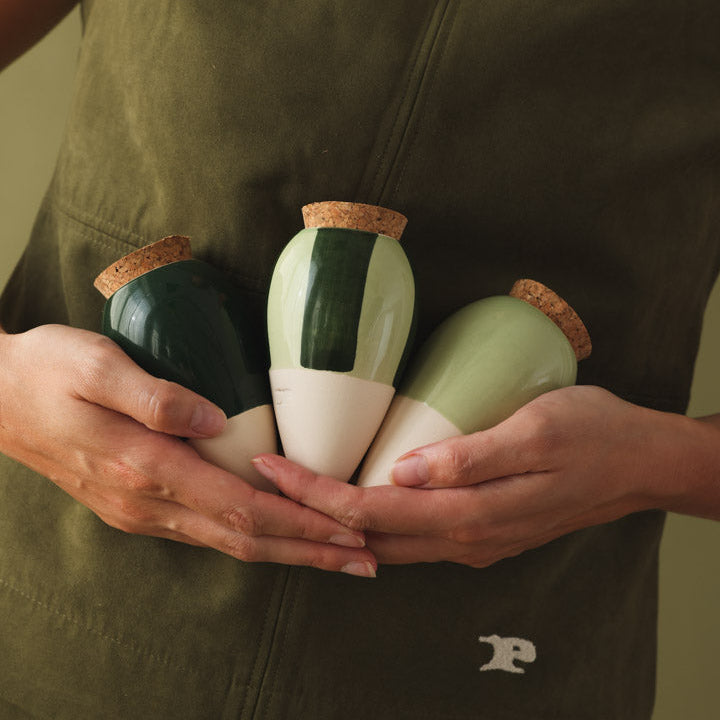
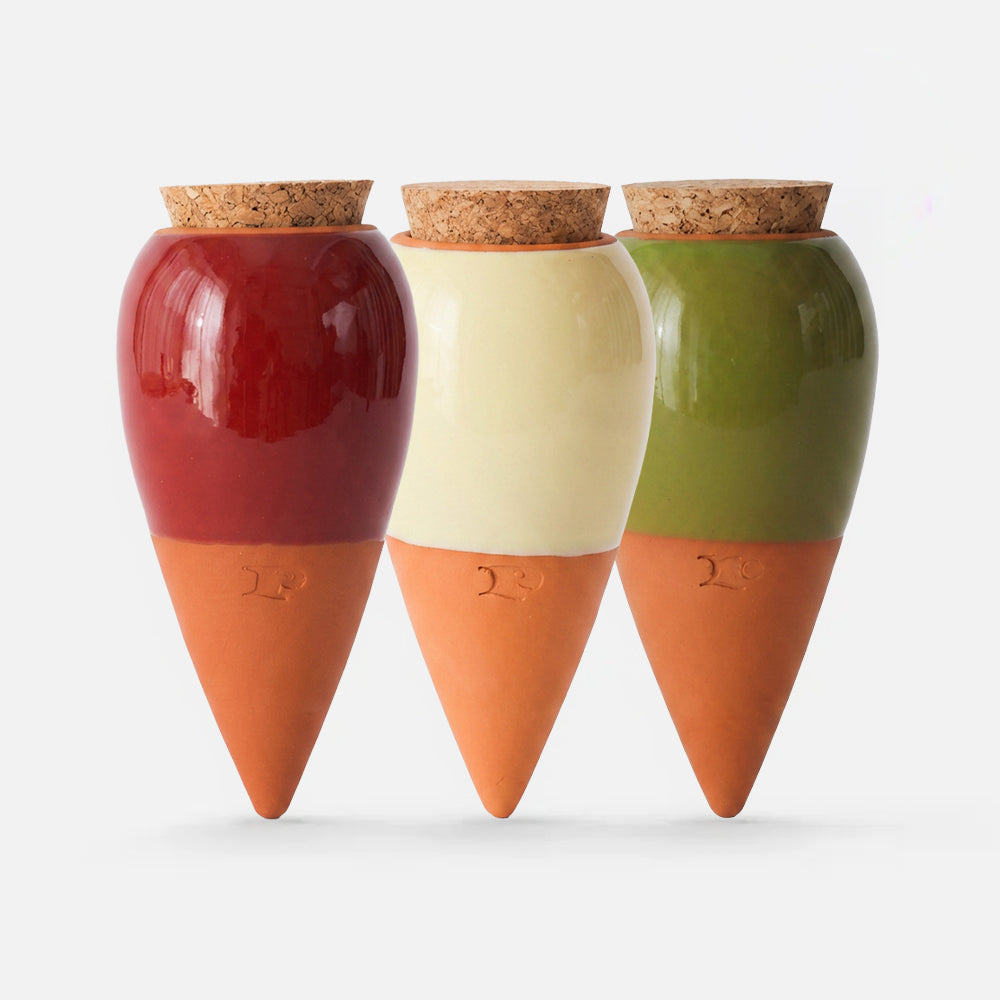
At Pepin, we've taken this age-old object and made it something you'll want to show off, not hide. Each oya is shaped by hand, with colours, patterns and finishes that make it a decorative piece in its own right. Because keeping your plants watered automatically can look good too.
How does an oya work (and why is it so effective)?
The idea is simple, and that's what makes it so clever. A terracotta oya is a reservoir with naturally microporous walls. Fill it with water and push it into the soil, and water passes through the walls by capillary action — the physical process that moves water naturally from a wetter area to a drier one.
In practice, the plant "draws" the water it needs, when it needs it. If the soil around the oya is already moist, the flow slows down on its own. If the soil dries out, the water flows faster. The plant regulates it, not you. And honestly, that changes everything.
The earliest traces of this irrigation system date back more than 4,000 years, to arid regions of China and North Africa. Entire civilisations grew crops using terracotta jars buried in the ground. The principle hasn't changed. We've simply adapted it for your indoor pots.
What sets handmade oyas apart from a DIY setup
If you've ever searched for "how to make an oya" online, you've probably come across that famous tutorial involving two terracotta pots stuck together with silicone glue. Let's be honest: it's a clever idea. And it can do the job in a pinch. But there's a world of difference between a weekend DIY project and an oya designed to last.
The first issue with the DIY version is porosity. A standard garden-centre pot isn't designed to release water evenly. Some areas let too much through, others not enough. The seal between the two pots often gives way eventually, especially with repeated wetting and drying. And looks-wise... let's just say it doesn't do much for a lovely decorative planter.
Pepin oyas take a different approach. Each one is shaped by hand from terracotta chosen specifically for its even porosity. The result: a steady, reliable release of water, week after week. The neck is designed to rise elegantly above the soil, serving as both a visual guide for refilling and a decorative detail.
And perhaps that's the real shift: with Pepin, the oya is no longer a practical object you hide under the leaves. It's an accessory you want to show off. And because every piece is handmade and unique, your oya won't look quite like anyone else's.
How long does the water last, and how can you tell it's working?
This is THE question everyone asks, and fair enough. On average, an olla provides a week's worth of water. But it depends on several things: the size of the oya, the size of the pot, the type of plant, the season, how much sun it gets, the room temperature... In summer, the water goes faster. In winter, an oya can easily last 10 days without a top-up.
Checking that everything's working is simple: look at the water level in the neck. If it's going down, the oya is releasing water. You can also touch the soil around the oya. It should feel slightly moist, not waterlogged. That's a good sign.
If the water level hasn't moved at all after several days, there are two things to check. First, make sure the soil is in direct contact with the sides of the oya (an air gap stops capillary action from working). Then check whether limescale has built up on the terracotta, as this can reduce its porosity.
Oyas that truly fit into your home
What often surprises people at first is that the neck of the oya sticks out above the soil. And that's entirely intentional. At Pepin, we want the oya to be part of the display. That little colourful neck peeking out from the leaves is like an accessory for your plants.
Line up three mini oyas in different-sized pots on a windowsill, and they make a lively little set. In a large pot with a monstera, a classic oya adds that eye-catching detail. On an office shelf, it's the kind of touch that makes a space feel warmer without any effort.
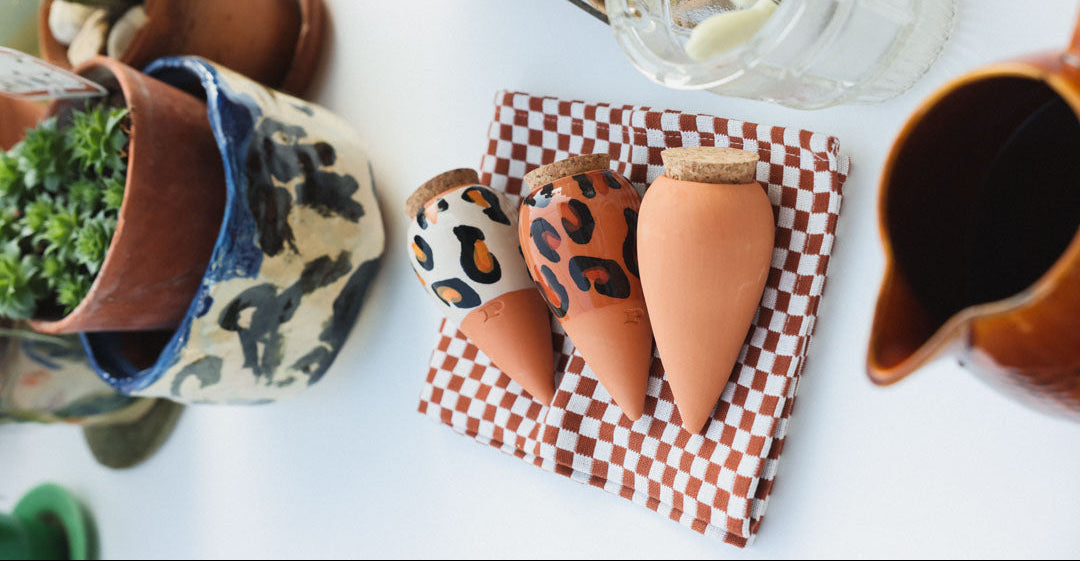
The heart or leopard olla is just the kind of piece that gets people talking. "What's that cute little thing in your pot?" And suddenly you're explaining capillary action to your guests. Limited editions, like the "Thank You" one for the end of the school year, also show that an oya makes a genuinely thoughtful gift: useful, original and lovely to look at. Not another mug or bunch of cut flowers.
Frequently asked questions about oyas
Do oyas really work?
Yes, it works through a real physical process: the porosity of terracotta combined with capillary action. Water passes through the walls at a rate set by the plant's needs. The one thing it needs to work well? Soil in direct contact with the sides of the oya.
We'd rather be upfront with you. There are a few things to bear in mind with oyas: for the first few days, it's worth keeping an eye on the water level to get a feel for how much your plant uses. And for very small plants in pots under 8 cm, even our mini ollas may be too big. In all other cases, they do exactly what they're meant to.
How do you fill and use an oya?
Before using your oya for the first time, soak it in water for at least 30 minutes. This lets the terracotta absorb water. Then push it into the soil in your pot, fill the neck with water, and you're done. Top it up when the level drops.
How long does an oya hold water for?
The water can last up to 10 days, depending on what the plant needs. In summer, you might need to top it up twice in that time. In winter, some oyas last ten days or more. You'll soon find the right rhythm.
What's the difference between an olla and an oya?
None — they're the same thing. "Oya" comes from the Spanish "olla", meaning pot or cooking pot. Both terms refer to a porous terracotta reservoir used for irrigation by capillary action.
How do I look after my oya?
Rinse the olla with clean water now and then to remove any mineral deposits. And that’s it!
At heart, an oya is wonderfully simple. An idea that's thousands of years old, a natural material shaped by hand, and a real result: better-hydrated plants, without the effort or stress. All in an object that's as lovely to look at as it is to use. If you'd like a calmer — and prettier — way to water your plants, take a look at the different colours and sizes. There's an oya to suit your home and your plants.