

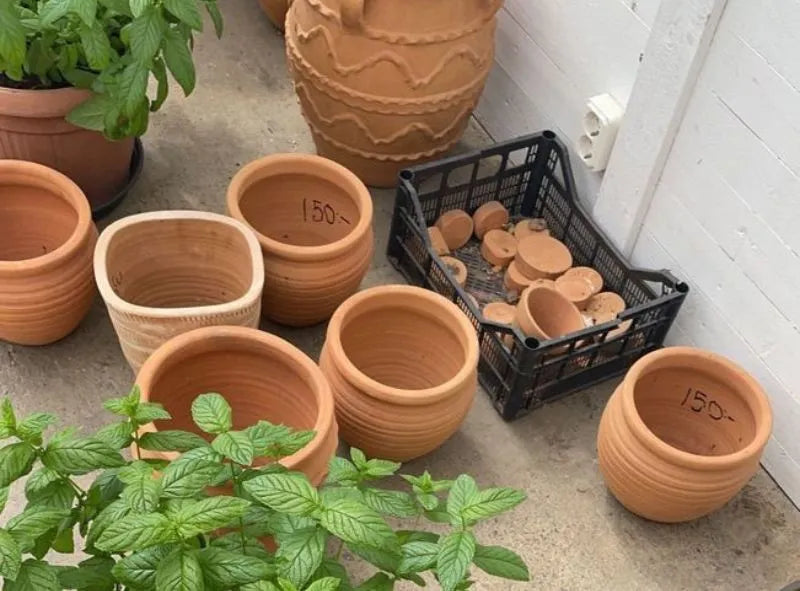
When it comes to choosing containers for your houseplants, it's essential to understand the difference between a pot and a cover pot. This distinction is not just aesthetic — it also plays a role in the wellbeing of your plants 🌱💚
Don't worry, we'll explain everything about the differences between these two types of containers and how they can influence the health of your plants.
What is a plant pot?
What is a pot for?
A plant pot is a container designed to hold compost and allow a plant to grow. Pots generally have holes at the bottom to ensure water drainage, thus preventing root rot.
They can be made from a variety of materials, such as plastic, clay, terracotta, or biodegradable materials.
Advantages of plant pots
- Effective drainage 👍 drainage holes allow excess water to escape, thus preventing root rot.
- Easy repotting 🪴 pots make repotting easier, providing an optimal environment for plant growth.
- Moisture control 💧 pots allow for better management of soil moisture, thus preventing waterlogging!
- Promotes root aeration 🌬️ terracotta pots, for example, are porous and allow roots to breathe better, thus promoting healthy growth.
- Stability for plants 🏠 heavier pots, such as those made from terracotta or ceramic, offer better stability, which is important for tall plants or those with dense foliage.
What is a plant cover pot?
What is a plant cover pot for?
A cover pot is a decorative container designed to hide a plant pot that is often less aesthetically pleasing. Unlike pots, cover pots do not have drainage holes. Their role is primarily aesthetic, allowing you to vary style and colour without disturbing the plant by repotting it. If you're on team indecisive and tend to change your décor style fairly regularly, we recommend cover pots, which you can swap around as the mood takes you.
Advantages of plant cover pots
- Aesthetics ✨ cover pots add a decorative touch to your interior, allowing you to vary styles. They are available in a wide variety of designs, colours and materials, making it easy to match them to your home décor!
- Protection 🪵 they protect surfaces from water splashes and soil. This is particularly useful for sensitive surfaces such as wood or fabrics.
- Insulation 🪟 cover pots help to maintain the temperature and humidity around the plant, which is particularly useful for certain plants. They can also offer extra protection against cold draughts.
- Ease of moving 🚶 by using a cover pot, you can easily move your plants without the risk of spilling soil or damaging the roots. This is particularly handy for heavy or large plants. And once again very practical if you're on team indecisive and tend to constantly rearrange everything (no judgement, we're the same...).
- Adaptability ❤️🩹 This one brings together all the reasons mentioned above! You can change your cover pot according to the seasons or your current décor, without having to repot your plant, which reduces stress for the plant.
How to choose between a pot and a cover pot?
Practical considerations
When choosing between a pot and a cover pot, it's important to take into account the specific needs of your plants. If you have plants that require optimal drainage, opt for pots with drainage holes. For decorative plants or if you want to vary the appearance without too much fuss, cover pots are an excellent option.
Combining the two
It's completely possible to combine the use of pots and plant pot covers. Place your plant in a pot with good drainage, then insert that pot into a more decorative cover.
This lets you enjoy the benefits of both types of containers while keeping your décor looking cohesive. It also makes maintenance easier, as you can remove the pot to water your plant without risking mess or damage to your home.
You can also combine practicality and aesthetics with our self-watering pot Paula. Thanks to its inner pot made of micro-porous ceramic, water slowly seeps directly to the roots for optimal, hands-free hydration. And its outer pot, with its very attractive design (we can say it), will add a fresh decorative touch to your living room 💫

Additional tips for caring for plants in pots and plant pot covers
-
Monitor moisture: even if plant pot covers don't have drainage holes, it's important to keep an eye on the soil's moisture level. Too much water can cause problems, so remember to remove the inner pot regularly to check the moisture level.
-
Use saucers: for pots with a drainage hole, remember to place a saucer or tray underneath to collect excess water. This can help prevent water damage to your furniture and floors (again, we're speaking from experience...).
-
Choose breathable materials : for pots, opt for materials such as terracotta or ceramic that allow better root aeration.
-
Avoid stagnant water: make sure water doesn't collect at the bottom of the plant pot cover. Too much stagnant water can lead to root rot problems. Remember to regularly empty out any excess water.
By choosing the right type of container and using the right solutions, you can not only upgrade your interior décor but also ensure the wellbeing of your favourite plants. 🌿
💌Sign up for our newsletter to receive exclusive tips and special offers.


