

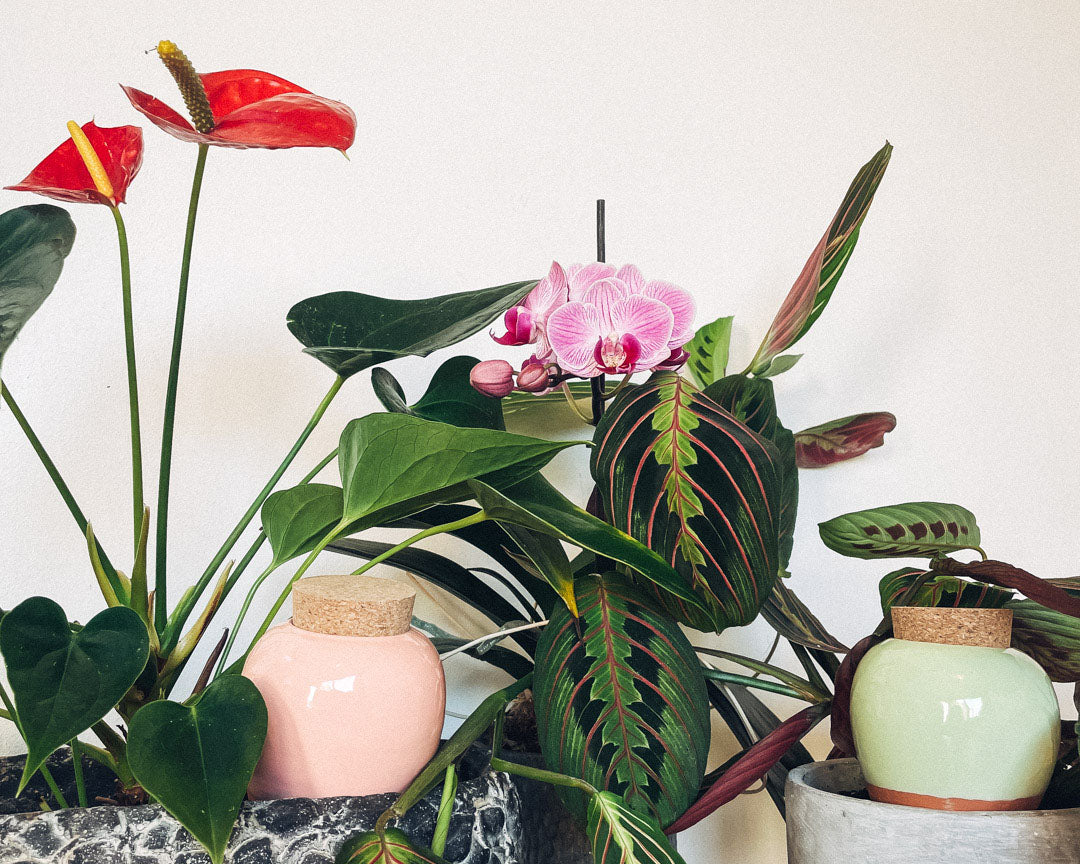
Orchids are exotic and magnificent flowers that can add colour and beauty to any living space. They do, however, have particular care requirements, and it's important to take these into account to ensure their growth and flowering.
Here are a few tips for caring for your orchids:
Place your orchids in a spot that receives indirect light. They need light, but not direct sunlight, which can cause burns on the leaves.
Use a pot with drainage holes to prevent water from stagnating in the pot and causing root rot problems.
Make sure to add a layer of gravel or clay pebbles at the bottom of the pot to help with water drainage.
Use a potting mix specially formulated for orchids and repot your plants every two to three years or so. This will help maintain adequate nutrient levels and prevent the roots from becoming overcrowded.
Water your orchids regularly, making sure the soil never dries out completely. However, avoid overwatering them or letting water stagnate in the pot.
Use rainwater or demineralised water if your tap water contains high levels of chlorine or limescale.
Fertilise your orchids approximately every two weeks with a fertiliser specially formulated for orchids. Follow the manufacturer's instructions to know how much to use and how to apply it. Cut back faded flower stems to encourage new blooms. Do this by cutting the stem just above a node with healthy leaves.
So how do you choose the ideal fertiliser to feed your orchids from the many options available on the market? There are countless choices, but here are the ones we can recommend — and they're natural too!
Compost
Compost is a mixture of organic materials that decompose naturally to create a nutrient-rich fertiliser for plants. It can be made from garden waste such as leaves, grass clippings, branches and faded flowers, as well as food waste such as eggshells, peelings and vegetable scraps. Compost can be used to improve the quality of your soil and to fertilise your plants naturally. You can use it as a fertiliser by mixing it into the soil before planting, or by spreading it on the surface of the soil around your plants. Compost is an eco-friendly and economical way to fertilise your plants and protect the environment by reducing waste.
Chicken manure
Chicken manure is an organic fertiliser obtained from the droppings and excrement of chickens. It is rich in nitrogen, phosphorus and potassium, making it a very effective fertiliser for plants. Chicken manure can be used fresh or composted before being applied to plants. It is recommended to compost it before use as it may contain bacteria that can be harmful to plants if used fresh. Chicken manure can be mixed with compost or incorporated directly into the soil before planting vegetables, flowers or other plants. It can also be used as mulch around plants to retain moisture and protect the roots.
The natural liquid fertiliser for orchids
A natural liquid fertiliser for orchids is a fertiliser that is made from natural ingredients such as plants, seaweed, eggshells, manure, etc. It is designed to feed and fertilise plants naturally, without using any chemicals.
Natural liquid fertilisers are often made from organic materials that are ground and diluted in water to create a liquid that is easy to apply to plants. They can be applied directly to the leaves of plants or to the soil around the base of the plant.
Natural liquid fertilisers are an eco-friendly alternative to chemical fertilisers and can be used to feed and fertilise a wide range of plants, including vegetables, flowers, trees and shrubs. They are particularly useful for plants in pots or window boxes, as they can be easily applied and absorbed by the plants.
Seaweed
Seaweed is an aquatic organism that can be used as a natural fertiliser for plants. It is rich in nutrients such as nitrogen, phosphorus and potassium, which are essential for the growth and development of plants. Seaweed can be used in different ways to fertilise plants:
As a liquid fertiliser: Seaweed can be blended into a purée and diluted in water to be used as a liquid fertiliser. It can be applied directly to the leaves of plants or to the soil around the base of the plant.
As mulch: Dried seaweed can be used as mulch around plants to retain moisture and protect the roots.
As a solid fertiliser: Seaweed can be mixed with compost or incorporated directly into the soil before planting vegetables, flowers or other plants.
Eggshell powder
Eggshell powder is obtained from crushed eggshells. Rich in calcium, phosphorus and protein, it makes an effective fertiliser for plants. As with seaweed, eggshell powder can be used as a solid fertiliser by mixing it with compost or incorporating it directly into the soil before planting, as mulch to retain moisture, or as a liquid fertiliser applied directly to the leaves or around the plant.
Please note that even though these are natural fertilisers, they should be used in moderation and the manufacturer's instructions followed. In general, it is recommended to fertilise orchids approximately every two weeks during the growing season, reducing the frequency during the dormancy period. Using too much natural fertiliser risks overfeeding your plants and damaging them.
With these tips, you should be able to care for your orchids effectively and get them to bloom regularly. Don't forget to keep a close eye on them and tend to them with care — you'll be rewarded with these beautiful, exotic flowers!


