

- ☀️Light
It prefers medium to bright indirect light. Direct sun exposure can damage its foliage.
- 💧Watering
The Spathiphyllum loves moisture. If it doesn't get enough, it can quickly dry out and its leaves will wilt.
- 🤒Signs of an unhappy plant
Dry leaves, brown tips: thirsty, poorly watered
Yellowing of leaves: presence of small pests is quite likely
- ❤️🩹Ease of keeping alive
❤️🩹❤️🩹/5
Today, we're talking about the Spathiphyllum!
Let's discover together how to care for this beautiful plant.
Origin of the Spathiphyllum
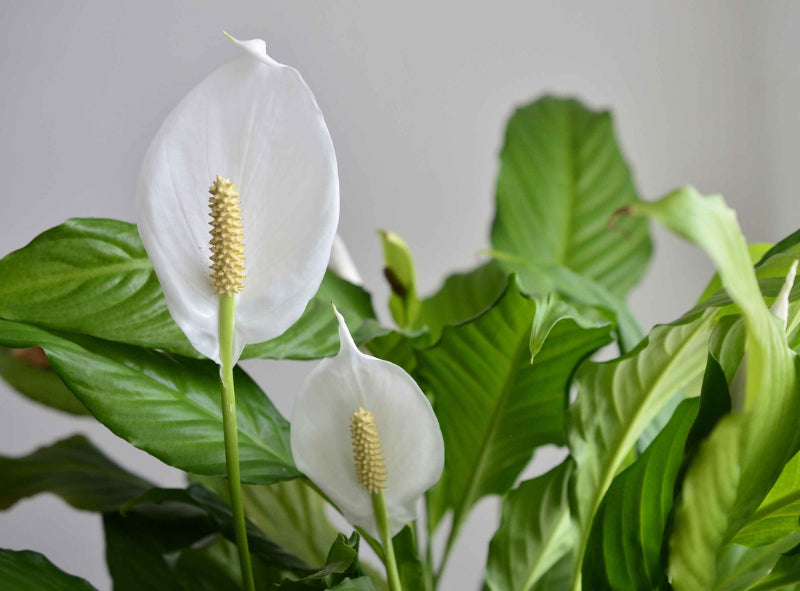
The Spathiphyllum, also known as the peace lily or moon flower, is a tropical plant. Its name literally means "peace leaf", referring to the emblematic part of the plant.
There are more than 50 species of this plant! They originate from Central America, South America and South-East Asia.
They belong to the same family as Anthuriums and Philodendrons.
These plants were discovered in the late 19th century and began to be cultivated shortly after.
Description of varieties and toxicity
There are several dozen species on the market, some very small, reaching around 15 cm in height, and others very large, able to reach 1.2 metres in height with large inflorescences.
It is important to note that these plants are toxic to animals and also to children if ingested.
Growing conditions and care
Spathiphyllum hate direct sunlight, which can damage their foliage. They prefer medium to bright indirect light.
They generally flower from January to August, but blooms are quite irregular.
To encourage them to rebloom, it's essential to provide them with good light, and above all to keep them moist.
The ideal temperatures are between 20 °C and 24 °C — perfect for your interiors!
Watering and humidity
As you'll have gathered, the Spathiphyllum loves moisture. If it doesn't get enough, it risks drying out and its leaves wilting.
It's a total drama queen! These plants can very, very quickly tend to droop and dry out. But with fresh water, they bounce right back!
To maintain good moisture levels, we recommend using our ollas, which are small water reservoirs made from micro-porous ceramic, delivering optimal hydration based on each plant's needs.
Common problems and solutions
Common problems include drying out, brown leaf tips and edges, often due to a lack of water. And for that, our ollas deliver water to your plant in a constant flow, so it stays perfectly hydrated.
In addition, these plants can also be susceptible to fungal and bacterial diseases due to the high humidity they require.
If you notice spots or yellowing of the leaves, it may be necessary to treat the plant for fungal or bacterial infections.
In that case, you can use our neem oil, a 100% natural insecticide and fungicide. You can use it as a treatment as well as a preventive measure!
Care after flowering
Once they flower, you can do what's called "deadheading" — cutting the top part of the flower when it starts to turn brown. This allows the plant to produce a new flower stem.
However, Spathiphyllum don't rebloom immediately after this. You'll need to be patient!
The cut should be made as close to the base of the flower as possible to encourage new growth.
Spathiphyllum flowers are typically white, but they can sometimes display slight green streaks. This generally means they are ageing and need more chlorophyll to absorb more light.
By following our tips, you'll be able to enjoy a healthy and thriving Spathiphyllum. You can now keep this drama queen alive and well!


